The E-Road Bike Compared to Other E-Bikes
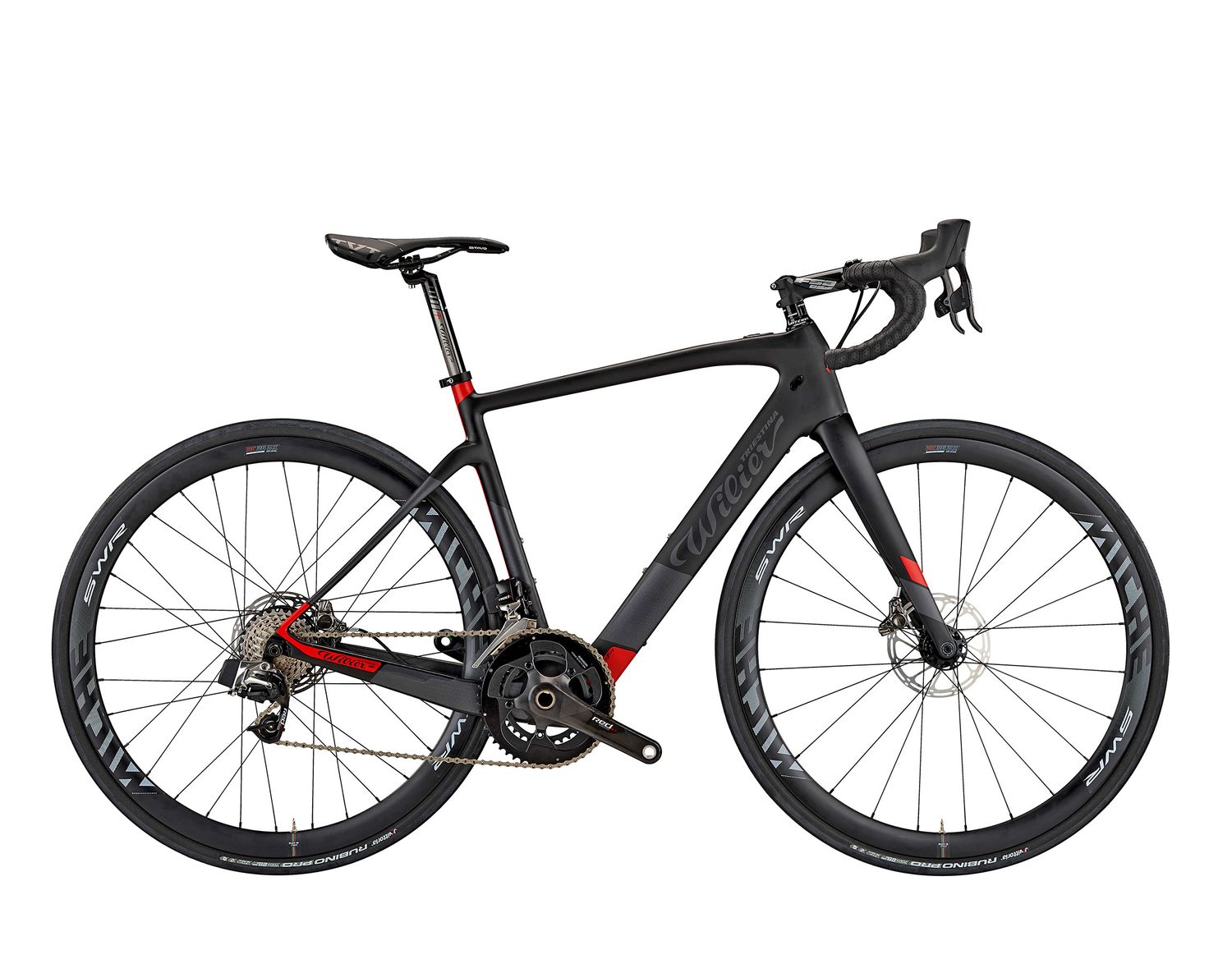
The most important qualities of a road bike are easy to guess: lightness and speed are perhaps the two that matter most. The extra weight that a battery and motor add to an e-bike is often a matter of debate among experts – and that applies to e-road bikes too. To get the best out of a powerful yet lightweight motor and battery, it should be mounted on an especially light, slim frame. So are the demands placed on an e-road bike really that high?
We have summarised the differences between an e-road bike and a conventional road bike for you here:
- The motor and batteries of an e-road bike are usually hidden inside the frame or the seat tube.
- The e-road bike is much heavier than a conventional road bike, with weight differences of up to 20 kg possible.
- Higher speeds put more strain on a road bike's materials, so the frame of an e-road bike is generally sturdier and the brakes are stronger.
- Conventional road bikes often have an ultra-light carbon frame, whereas e-road bikes do not necessarily use a carbon frame but a heavier aluminium one.
- E-road bikes should use disc brakes to improve braking performance. Rim brakes, as used on conventional road bikes, could struggle to cope with the weight of an e-road bike.
Where does the e-road bike come from?
The e-road bike is an excellent example of current technological development. Classic e-bikes were the first to conquer the bicycle market, followed by e-mountain bikes. These allow riders to head off-road as well. Given that various manufacturers bring new and improved e-bikes to market every year, the emergence of e-road bikes comes as no surprise:
In 2011 and 2012, the first e-road bikes dominated the market. At the time, however, they were still relatively little known. The e-road bike could not win over the market because it lacked modern technical features. Since 2016, many manufacturers have developed new and more refined versions each year. There are now several e-road bike events, even if they are not officially recognised competitions. But who knows – perhaps that is still to come? Doping would then extend to the motors of e-racing bikes too – the keyword being motor doping.
Who is an e-road bike right for? The pros and cons of an e-bike with an electric motor
Ask who a road bike with an electric motor is suited to and you will get a range of answers. Some argue that riding a road bike requires top fitness and that you should do without technical assistance.
Others believe an e-road bike is ideal for road cyclists – whether amateur or professional – who, for various reasons, have difficulties with conventional road bikes. Physical problems or health limitations, whether short- or long-term, could be the cause.
Fans of e-road bikes are, of course, in favour of buying one, and the arguments in their favour look promising:
- Longer distances can be covered with less effort.
- It is possible to tackle difficult and steep routes.
- The bike can be adapted individually to each training situation, regardless of the route.
- Riding mountain routes becomes easier, and you can cover more ground in the same amount of time.
In 2019, technical progress led to more powerful motors and better battery performance for e-road bikes.
Training can be improved: both speed and endurance training are recommended.
To be fair, the shortcomings of the e-road bike now need to be addressed. As with many other pieces of sports equipment, these are found in e-bikes with an electric motor:
- higher weight
- more expensive to buy
- Maintaining the battery and motor means there are more wearing parts than on a normal road bike.
- Because higher speeds are ridden and consumption therefore rises sharply, the range can be shorter than that of an e-mountain bike.
Many recreational riders wonder whether they should buy an e-mountain bike instead of an e-road bike. This bike is adaptable and can be used on a variety of terrain. With the design of the mountain bike, even winding forest tracks are easy to ride. If you are seriously tempted to buy an e-road bike, we recommend starting with a hire model to gain enough experience out on the road.
The legal basics of e-bike racing
Cycle racing is fundamentally about speed. And that is precisely where the problem with e-road bikes lies: some e-road bikes assist the rider while pedalling at speeds of up to 45 km/h. This always refers to the technical speed and not the speed you reach, for example, when descending. The legal position is therefore determined by the class into which the e-road bike falls. In Germany there are essentially two classes:
- When pedalling, the rider is assisted by an S-pedelec. Cycle paths are not permitted, a helmet is required, and an AM driving licence is needed. The rider must take out insurance and fit a number plate to the bike.
- "E-bikes" provide assistance at the push of a button, which means the motor assists even when the user is not pedalling. A bike in this class may be used on a cycle path, provided e-bikes are permitted and the speed does not exceed 25 km/h. Insurance, a compulsory helmet and a number plate are required, as is compliance with the drink-driving limit.
The term "e-bikes" is often used to mean pedelecs.
In summary, the increased speed on roads and cycle paths has led to new requirements in Austria and Germany: a driving licence, a compulsory helmet and mandatory insurance.
Because e-bike users are often travelling faster than they could under their own power, the risk of accidents rises. Accidents can, however, be minimised through safety training and knowledge of the regulations.
The e-motor road bike: a look into the future
As technology advances, the e-road bike of the future will become ever lighter and faster. That means higher speeds as well as lighter batteries and motors with greater capacity and power. Carbon e-road bike models are on the rise, with the latest versions already weighing around 10 kg. Greater range is achieved by optimising battery performance. The bike can then cover up to 200 kilometres in one go.
The question of whether e-road bikes should be admitted to official competitions is also raised regularly. In short, the motors are not yet used at events such as the Tour de France. In the past there have been various controversies and claims about the unlawful use of micro-motors. In 2010, the UCI even deployed a scanner to identify tampered bikes. Will e-road bikes ever have an official race start? We're curious to find out!